
الأنساب الطالبيّة
يعود نسب السادة الطالبيين إلى علي بن أبي طالب رضي الله عنه، ومن ذريته الكريمة تفرعت أنساب شريفة عديدة انتشرت في أرجاء العالم الإسلامي ولهم وجود في السودان، منها:

🔹 الحسنيّة ينتسبون إلى الإمام الحسن بن علي بن أبي طالب رضي الله عنهما، سبط رسول الله ﷺ الأكبر، وسيد شباب أهل الجنة. وقد انتشرت ذريته في السودان في عدة مناطق منهم ال البركاتي و ال الإدريسي وغيرهم
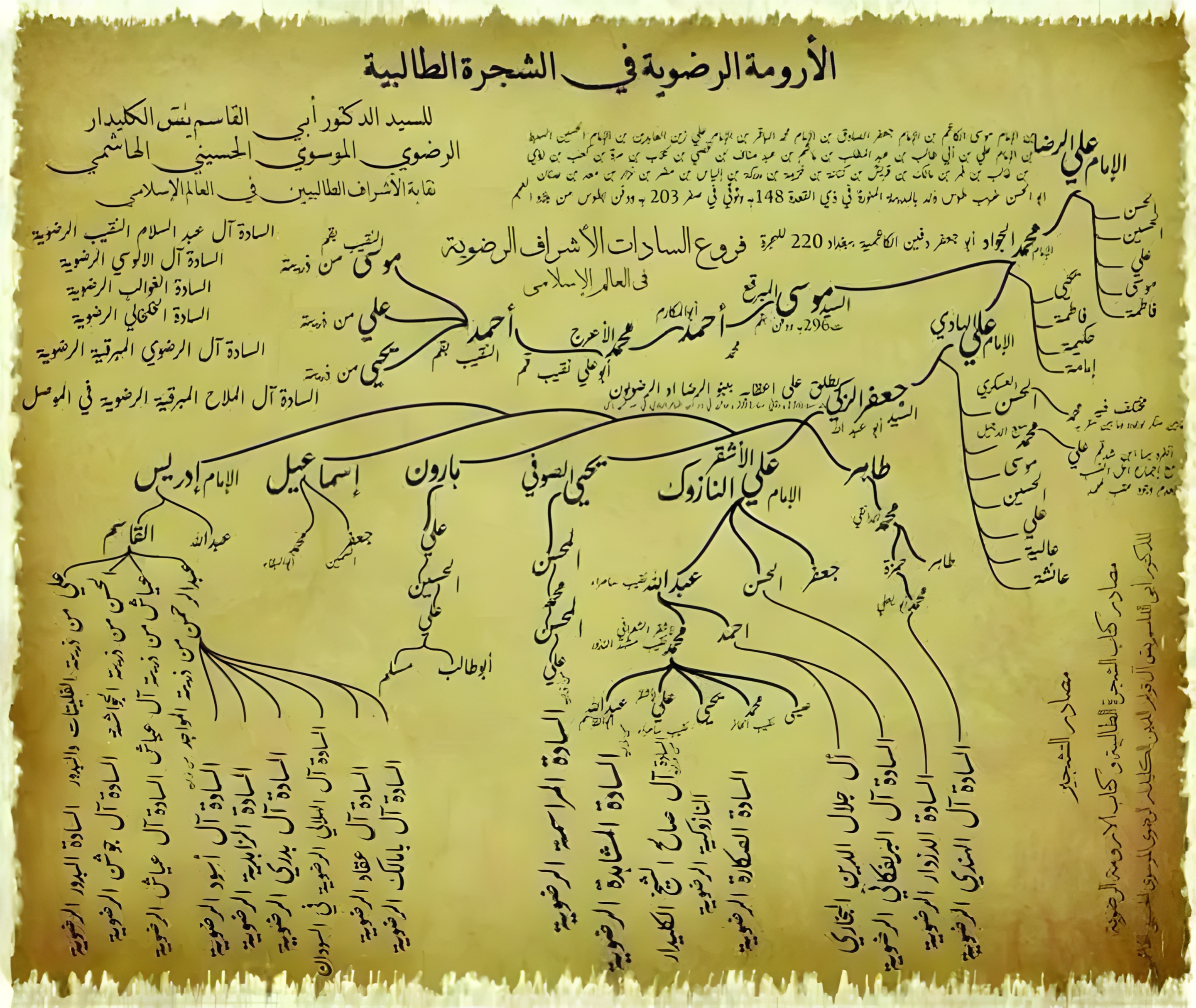
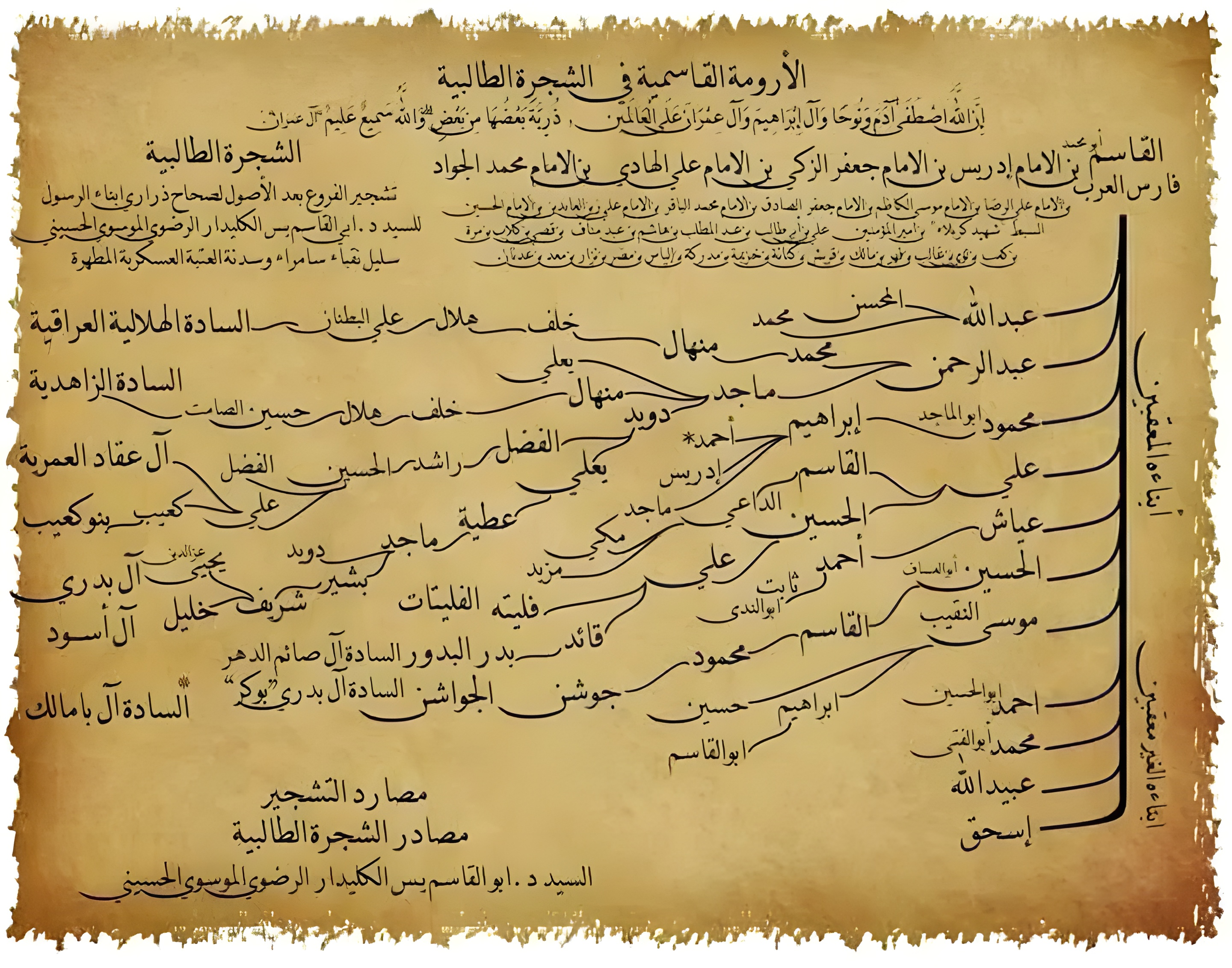
🔹 الحسينيّة ينتسبون إلى الإمام الحسين بن علي بن أبي طالب رضي الله عنهما، سبط رسول الله ﷺ الأصغر، الشهيد بكربلاء. وقد انتشرت ذريته في السودان في عدة مناطق منهم السادة التسعين وال القاضي وال الجنيد الأخضر العريضي والقواسمه والادراسة وغيرهم.
🔹 الجعفريّة ينتسبون إلى الإمام جعفر الطيار بن أبي طالب رضي الله عنه، الذي استشهد في مؤتة.
🔹 المحمديّة وهم ذرية الإمام محمد بن الحنفية بن علي بن أبي طالب رضي الله عنه.
The Ṭālibī Lineages
The lineage of the Ṭālibīs traces back to ʿAlī ibn Abī Ṭālib (may Allāh be pleased with him). From his noble descendants branched out numerous honorable lineages that spread across the Islamic world, with a presence also in Sudan, including:
🔹 The Ḥasanids – descendants of Imām al-Ḥasan ibn ʿAlī ibn Abī Ṭālib (may Allāh be pleased with them both), the eldest grandson of the Messenger of Allāh ﷺ and the master of the youth of Paradise. His progeny spread throughout Sudan in various regions, including the al-Barakātī family, the al-Idrīsī family, and others.
🔹 The Ḥusaynids – descendants of Imām al-Ḥusayn ibn ʿAlī ibn Abī Ṭālib (may Allāh be pleased with them both), the youngest grandson of the Messenger of Allāh ﷺ, martyred at Karbalāʾ. His progeny spread throughout Sudan in various regions, including the as-Sādah at-Tisʿīn (the Ninety Lords), the al-Qāḍī family, the al-Junayd al-Akhḍar al-ʿArīḍī family, the al-Qawāsimah, the al-Idrāsah, and others.
🔹 The Jaʿfarids – descendants of Imām Jaʿfar aṭ-Ṭayyār ibn Abī Ṭālib (may Allāh be pleased with him), who was martyred at Muʾtah.
🔹 The Muḥammadids – the descendants of Imām Muḥammad ibn al-Ḥanafiyyah ibn ʿAlī ibn Abī Ṭālib (may Allāh be pleased with him).
السادة التسعين القواسم الحسينيين في السودان
الاسم يشير إلى تسعةٍ وتسعين شريفًا (أو "المائة كاملة – المية") من نسل الإمام الحسين بن علي رضي الله عنهما، الذين نزحوا من العراق/المدينة المنورة إلى مصر والمغرب العربي (تونس والجزائر والمغرب)، ورجعوا إلى مصر ثم إلى السودان، واستقروا فيه لاكثر من عشرة قرون، واشتغلوا بنشر الإسلام بالسلم والعلم والمعرفة. وهم شيوخ القوارية في السلطنة السنارية الأبية، ومقدِّمو الحجيج السناري إلى أرض الحجاز كابرًا عن كابر، وأسياد القوم. وتُعرف تفرعاتهم بـ "المغاربة القواسمة الحسينية".
النسب:
سلالة حسينية اصيلة نقية النسب من الإمام الحسين رضي الله عنه.
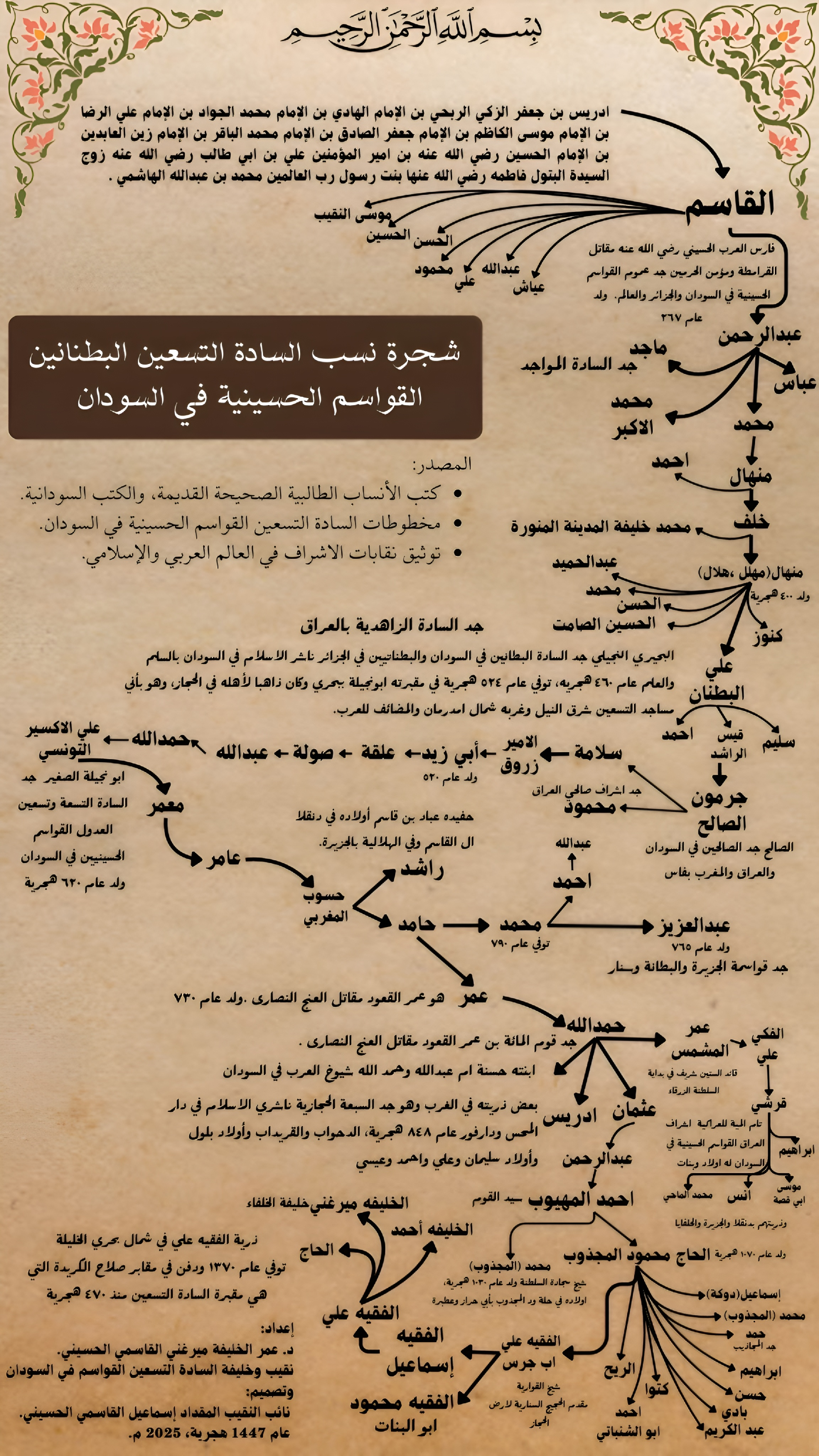
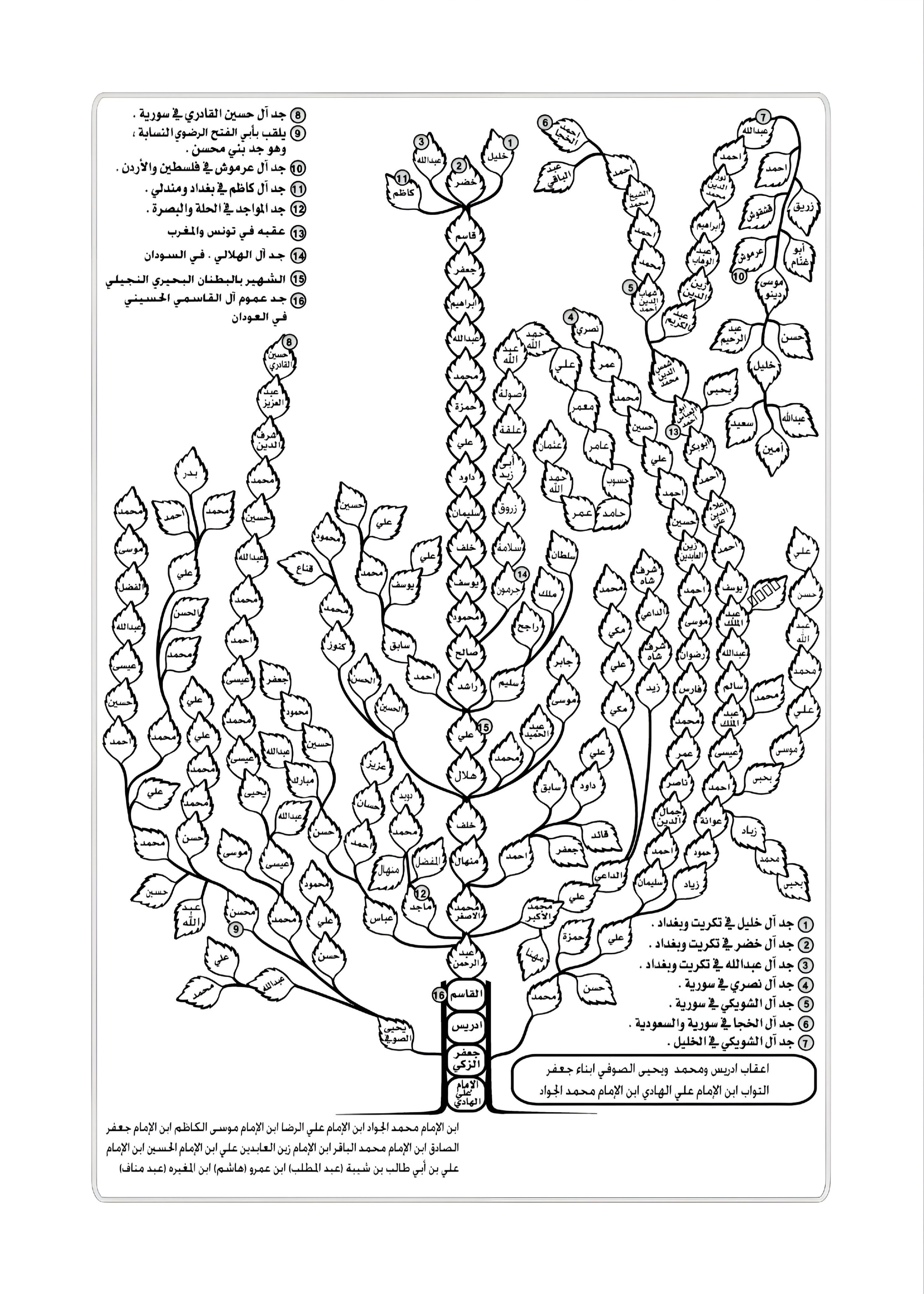
جذورهم النسبية تعود إلى السيد الشريف علي البطنان البحيري بن منهال (هلال) بن خلف بن السيد منهال بن السيد محمد بن السيد عبد الرحمن بن السيد القاسم (فارس العرب) بن إدريس بن السيد جعفر الزكي الربحي بن الإمام الهادي بن الإمام محمد الجواد بن الإمام علي الرضا بن الإمام موسى الكاظم بن الإمام جعفر الصادق بن الإمام محمد الباقر بن الإمام علي زين العابدين رضي الله عنه بن الإمام السبط الشهيد أبي عبد الله الحسين رضي الله عنه بن أمير المؤمنين علي بن أبي طالب رضي الله عنه زوج السيدة البتول فاطمة رضي الله عنها بنت رسول رب العالمين محمد بن عبد الله الهاشمي.
رحلة الهجرة
بعد اضطرابات وتضييقات في مصر قبل نحو 960 عامًا من قِبَل الفاطميين، تجمّع هذا الجيل – أحد عشر أميرًا شريفًا – في منطقة البحيرة، ثم تفرّقوا في أرجاء العالم الإسلامي، ومن بينهم من استقر في السودان. ودخلوا إلى دنقلا عام 460 هجرية، ثم انتشروا بعدها في مختلف ولايات السودان.
انتقل بعض منهم إلى البطانة ثم إلى ملتقى النيلين (بحري أبو نجيلة) حيث عاش جدهم التسعة والتسعين عديلة الذي توفي قبل نحو تسعة قرون.
استقر قسم كبير منهم في منطقة الدبة والخليلة شمال بحري منذ عشرة قرون، حيث أسسوا مساجدهم وتكاياهم في عهد مملكة علوة المسيحية ومملكة سوبا.
ما تزال آثارهم ماثلة إلى اليوم في أنحاء السودان.
من أعلامهم البارزين
السيد عثمان بن حمدالله: جد قوم المية شرق النيل بالدبة والخليلة.
حفيده السيد الحاج محمود المجذوب سلطان الذاكرين: شيخ القوارية الملقب بـ بلاع الدبيب، وأمير الحج السناري، وقد ورث أحفاده المشيخة في دولة سنار وسجادة الفونج، موثقين بالعهود السلطانية كابراً عن كابر.
السيد عمر المشمس بن حمدالله: جد قرشي تام المية (ماحي المية)، وتوفي قبل خمسة قرون بالدبة والخليلة.
السيد إدريس بن حمدالله: جد تسعين الشمالية، ومن ذريته القريداب (أولاد موسى قريد) ومعهم الدحواب الأشراف.
امتدادهم الجغرافي
لهم ذرية في القضارف، والجزيرة، والشمالية وسنار وغرب السودان وغيرهم.
تواجدوا في رفاعة ومع الجعليين.
نشر أولاد إدريس الإسلام والمذهب المالكي في دارفور خلال عهد السلطان سليمان صولونج، واختلطوا بالجوامعة.
ويعد د. عمر الحسيني الهاشمي من أبرزهم حاليا، وهو خليفة وعميد السادة الأشراف التسعين المعروفون بـ القواسم الحسينيين في السودان والنقيب العام للسادة الاشراف الطالبيين ولعب أدوارًا دينية واجتماعية ورعوية كبيرة علي المستوى المحلي والخارجي.
التحقيق في النسب:
موثّق في كل نقابات العالم وموثق عبر دراسات نسابية ومخطوطات متوارثه منذ عدة اجيال، وأبحاث مؤرخين مثل الدكتور النساب السيد عمر بن السيد الخليفة ميرغني الهلالي القاسمي الحسيني.
ورد ذكر هجرتهم وفروعهم في مخطوطات قديمة عمرها أكثر من ثمانية قرون.
The Ninety Hashemite al-Qawāsim al-Ḥusaynīs in Sudan
The name refers to ninety-nine noblemen (or "the complete hundred – al-Miʾah") from the descendants of Imām al-Ḥusayn ibn ʿAlī (may Allāh be pleased with them both), who migrated from Iraq/Medina to Egypt and the Maghreb (Tunisia, Algeria, Morocco), then returned to Egypt and later to Sudan, where they settled for more than ten centuries. They dedicated themselves to spreading Islam through peace, knowledge, and learning. They were the shaykhs of the Qawāriyya in the proud Sinnar Sultanate, the leaders of the Sinnar pilgrimage caravans to the Ḥijāz, generation after generation, and the chiefs of their people. Their branches are known as al-Maghāriba al-Qawāsima al-Ḥusaynīya ("the Maghrebi al-Qawāsim descendants of al-Ḥusayn").
Lineage:
They are a pure, authentic Ḥusaynī lineage descending directly from Imām al-Ḥusayn (may Allāh be pleased with him).
Their genealogical roots go back to: as-Sayyid ash-Sharīf ʿAlī al-Buṭnān al-Buḥayrī ibn Minhal (Hilāl) ibn Khalaf ibn as-Sayyid Minhal ibn as-Sayyid Muḥammad ibn as-Sayyid ʿAbdir-Raḥmān ibn as-Sayyid al-Qāsim (Fāris al-ʿArab) ibn Idrīs ibn as-Sayyid Jaʿfar az-Zakī ar-Rubḥī ibn al-Imām al-Hādī ibn al-Imām Muḥammad al-Jawād ibn al-Imām ʿAlī ar-Riḍā ibn al-Imām Mūsá al-Kāẓim ibn al-Imām Jaʿfar aṣ-Ṣādiq ibn al-Imām Muḥammad al-Bāqir ibn al-Imām ʿAlī Zayn al-ʿĀbidīn (may Allāh be pleased with him) ibn al-Imām as-Sibṭ ash-Shahīd Abū ʿAbdillāh al-Ḥusayn (may Allāh be pleased with him) ibn Amīr al-Muʾminīn ʿAlī ibn Abī Ṭālib (may Allāh be pleased with him), the husband of Lady al-Batūl Fāṭimah (may Allāh be pleased with her), daughter of the Messenger of the Lord of the worlds, Muḥammad ibn ʿAbdillāh al-Hāshimī.
Migration Journey
After unrest and oppression in Egypt nearly 960 years ago at the hands of the Fāṭimids, this generation—eleven noble princes—gathered in the Buḥayrah region. From there, they dispersed across the Muslim world, some of whom settled in Sudan. They entered Dongola in the year 460 AH, after which they spread throughout different states of Sudan.
Some of them moved to al-Buṭāna and then to the confluence of the two Niles (Baḥrī Abū Nugaylah), where their ancestor of the ninety-nine, ʿAdīlah, lived and passed away nearly nine centuries ago.
A large group settled in ad-Dabbah and al-Khalīlah, north of Baḥrī, ten centuries ago, where they built their mosques and takāyā during the era of the Christian Kingdom of Alwa and the Kingdom of Sūbah.
Their traces remain visible in Sudan until today.
Notable Figures
as-Sayyid ʿUthmān ibn Ḥamdullāh: Ancestor of the "Qawm al-Miʾah" east of the Nile, in ad-Dabbah and al-Khalīlah.
His grandson, as-Sayyid al-Ḥājj Maḥmūd al-Majdhūb, Sultan of the Rememberers: Shaykh of the Qawāriyya, known as Ballāʿ ad-Dabīb, Sinnar's Amir of Ḥajj. His descendants inherited leadership in the state of Sinnar and the Funj sajjādah (spiritual institution), documented in royal charters generation after generation.
as-Sayyid ʿUmar al-Mushammis ibn Ḥamdullāh: Ancestor of Qurashī Tām al-Miʾah (Māḥī al-Miʾah), who died five centuries ago in ad-Dabbah and al-Khalīlah.
ad-Sayyid Idrīs ibn Ḥamdullāh: Ancestor of the Tisʿīn ash-Shamāliyya (the Northern Ninety). Among his descendants are the Quraydāb (the sons of Mūsá Qurayd), along with the Daḥwāb Ashrāf.
Geographical Presence
They have descendants in al-Qaḍārif, al-Jazīrah, Northern Sudan, Sinnar, Western Sudan, and elsewhere.
They also lived in Rufāʿa and among the Jaʿaliyyīn.
The sons of Idrīs spread Islam and the Mālikī maḏhab in Dārfūr during the reign of Sulṭān Sulaymān Sūlūnj, and they intermarried with the Jawāmiʿa.
Among their prominent representatives today is Dr. ʿUmar al-Ḥusaynī al-Hāshimī, who is the successor and head of the Ninety Hashemite Ashrāf known as al-Qawāsim al-Ḥusaynīyīn in Sudan, as well as the General Head of the Ṭālibī Ashrāf Union. He has played significant religious, social, and pastoral roles both locally and abroad.
Lineage Verification
Their noble lineage is authenticated in all Ashrāf unions worldwide, documented through genealogical studies and manuscripts inherited for generations, as well as historical research by scholars such as the genealogist Dr. as-Sayyid ʿUmar ibn as-Sayyid al-Khalīfah Mirġanī al-Hilālī al-Qāsimī al-Ḥusaynī.
Their migration and branches are mentioned in ancient manuscripts more than eight centuries old.